A reflection on the value of the human gesture in the age of AI
This week’s blog idea began in an unlikely place: an interior design store, for our more curious readers—it’s the kind that begins and ends with an “a.”
This week’s blog idea began in an unlikely place: an interior design store, for our more curious readers—it’s the kind that begins and ends with an “a.”
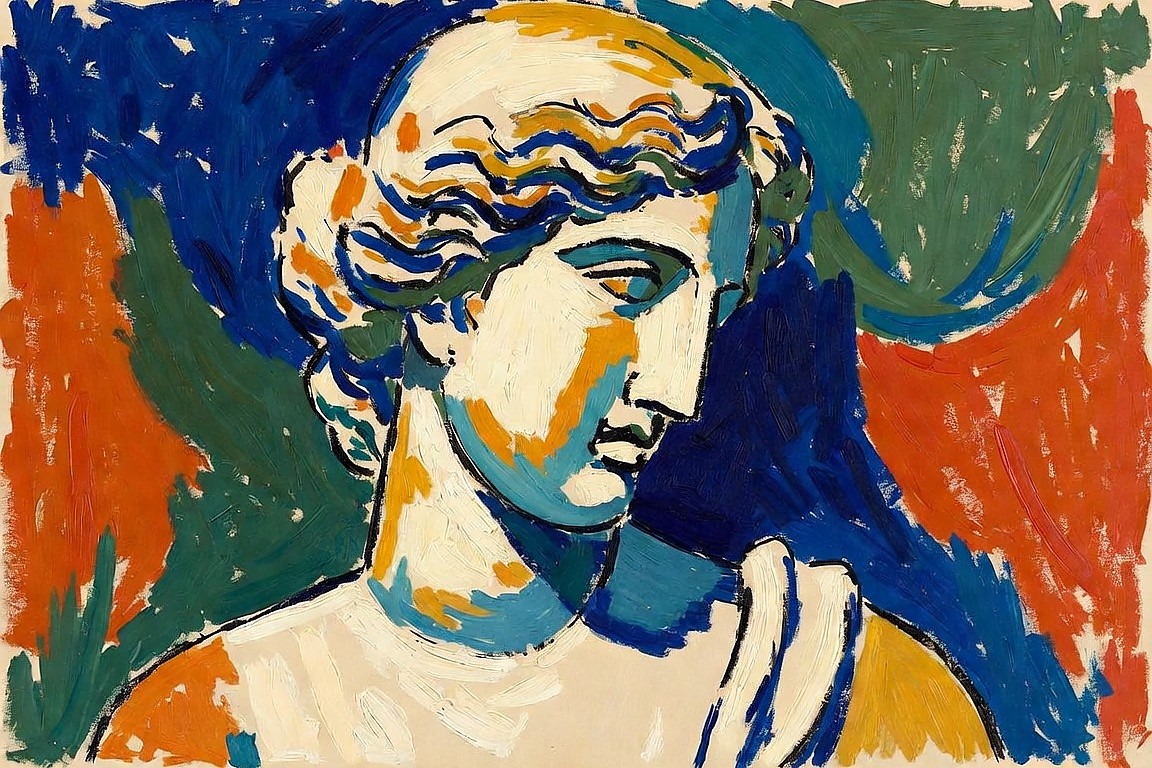
I was looking for a gift that, as is often the case given the vicissitudes of modern life, was already going to be late. As I wandered through the store without much purpose, I couldn’t help but notice what all the displayed pieces seemed to share: they were not perfect. The edges were uneven, the textures organic, the finishes revealed the hand that made them. There was intention, but contained. You could sense the presence of those who made them (even if many were later replicated at scale).
From Marni’s colourful owls, to the pieces by Marie Michielssen, and the works of the Belgian-Peruvian painter Shirley Villavicencio Pizango — which evoke something Matisse-like — all the way to classics such as Aldo Londi’s Rimini Blu collection, a clear tendency emerges: a return to the organic, the handmade, the imperfect, to what is more human.
This image stayed with me as I left the store: the way imperfection, far from being a flaw, can be precisely what makes us pause and look more closely. In a context saturated with digital production, this appreciation of the human gesture feels less like an aesthetic and more like a position.
I couldn’t help but draw a connection to how artificial intelligence is transforming web design.
We are now at a moment where almost anything can be generated in a matter of seconds: layouts, visual systems, text, variations of interfaces. The process becomes increasingly fast and accessible, but at the same time everything tends to converge towards a single language: increasingly uniform, homogeneous, and ultimately indistinct.
This is where personalization becomes truly important. Not in the superficial sense of “customising” colours or fonts, but as a conscious decision about identity: about what makes sense for a particular company, business, or sector. What is kept, what is transformed, and what is shaped by the human hand, rather than by automation.
Perhaps, in the face of this ease of generating everything, the real challenge in the age of AI is not to create more, but to choose better — with intention, judgement, and awareness.