Myths about Artificial Intelligence in Web Development
From code assistants that speed up the writing of functionalities to algorithms capable of personalizing experiences in real-time, AI is redefining how we build, test, and optimize.
From code assistants that speed up the writing of functionalities to algorithms capable of personalizing experiences in real-time, AI is redefining how we build, test, and optimize.
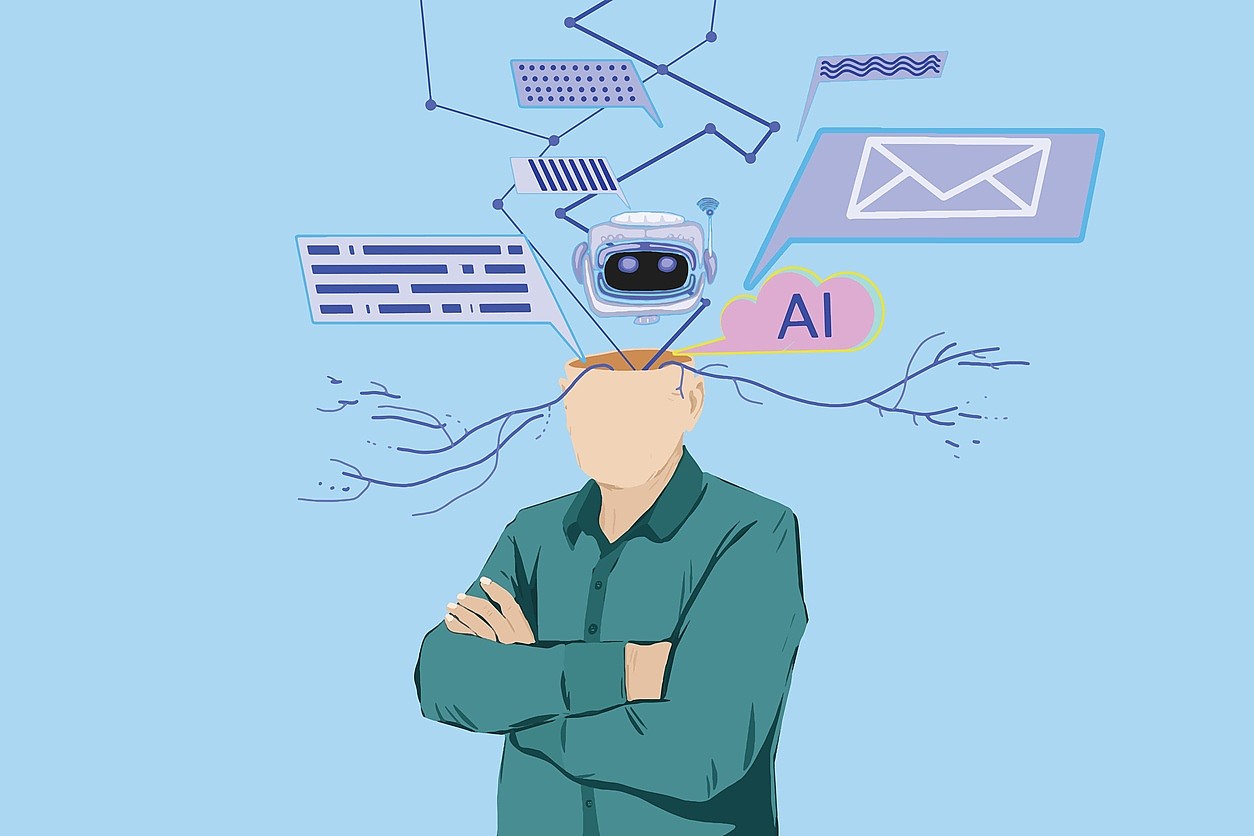
However, as the use of AI grows, various myths arise that create confusion and, at times, fear among developers, companies, and users. Much of what is said about Artificial Intelligence, especially in the context of web development, oscillates between enthusiasm and apprehension.
Understanding the true impact of AI on web development is essential for making informed decisions, whether in applying new tools, defining digital strategies, or evolving technical skills. More than following trends, it is important to separate facts from myths.
“AI will replace developers”
This is undoubtedly the most common myth. AI-based tools can generate code, suggest improvements, and automate repetitive tasks. However, they remain dependent on human guidance. Creativity, critical thinking, and the ability to solve complex problems are still inherently human skills.
In practice, AI acts as a productivity tool, not as a replacement.
“AI writes perfect code”
Although AI models can quickly generate functional code, this does not mean it is perfect or ready for production. Common issues such as subtle bugs, poorly optimized code, or lack of project context still exist.
Therefore, the role of the developer remains essential to validate, test, and adapt the code.
“AI makes websites completely autonomous”
The idea of fully autonomous websites, capable of creating, managing, optimizing, and evolving without any human intervention, is still far from reality.
There are several critical areas where human intervention remains indispensable:
The true value of AI in web development does not lie in the total replacement of human control, but rather in creating more efficient, flexible, and informed systems.
“Using AI eliminates the need to learn programming"
With the emergence of AI tools capable of generating code from natural language instructions, the idea has arisen that learning programming may become irrelevant. After all, if AI writes the code for us, why invest time in learning?
In practice, the opposite happens. The quality of code generated by AI is directly related to the quality of the instructions given, and this requires technical knowledge. An experienced developer can:
Moreover, AI does not truly understand the overall context of a project, as it is unaware of previous decisions or technical limitations, and therefore, the process continues to rely heavily on the developer.
Programming goes far beyond writing code. It includes logical and structured thinking, solving complex problems, and making technical decisions. These skills not only remain relevant but become even more valuable in a scenario where AI accelerates execution but does not replace reasoning.
Artificial Intelligence is undoubtedly redefining web development, but not in the simplistic or extremist way that many imagine. It is important to have a balanced perspective: AI is neither an imminent threat nor a miraculous solution.
Throughout this article, it becomes clear that many of the myths associated with AI stem from a superficial understanding of its true role. The future of web development will not be defined by machines working alone, but by developers who know how to use them strategically, leveraging their potential. And, in this context, the true competitive advantage will not be in the mere use of AI, but in the intelligent way it is utilized and applied.